

There's a strange moment a lot of growing companies hit. The business is doing well. Orders are up, the team is bigger, last year was the best year yet. And somehow the day-to-day feels harder than it did when you had half the revenue.
If that sounds familiar, the problem usually isn't your team. It's your tools.
QuickBooks is a great piece of software. So is Excel. Most companies run on some combination of the two for years, and they should — they're cheap, everyone knows how to use them, and they do the job. The trouble is that they do a job, not the whole job. And the gap between those two things widens quietly, until one day you look up and half your week is spent keeping the tools in sync instead of running the company.
Here's how to tell you've reached that point.
You're rekeying the same data into three different places
A sales rep closes a deal. Someone types it into a spreadsheet. Someone else types it into QuickBooks. A third person updates the inventory tracker. Same order, entered three times, by three people, with three chances to fat-finger a number.
This is the single clearest sign. When the same fact has to be hand-carried between systems, you don't really have a system. You have a relay race, and the baton gets dropped more often than anyone admits.
Nobody can agree on the numbers
Marketing pulls a report that says one thing. Finance pulls one that says another. Both are technically right, because they're pulling from different spreadsheets that were last reconciled at slightly different times. So the meeting that was supposed to be about strategy turns into twenty minutes of "wait, where did you get that figure?"
When your team spends more energy arguing about whose number is correct than deciding what to do about it, the data isn't serving you anymore.
Month-end close takes a week (and ruins someone's week)
A clean close should be a routine. If yours involves one or two people disappearing for several days, chasing down receipts, matching transactions by hand, and praying nothing was missed, that's not diligence — it's a workaround. The close is slow because the data lived in a dozen disconnected places all month and now it all has to be wrestled together at once.
Your inventory is either a guess or a phone call
Ask "how many do we have right now?" and watch what happens. If the honest answer is "let me check the spreadsheet" followed by "let me actually go count," your inventory data is decorative. QuickBooks wasn't built to manage stock across locations in real time, and a spreadsheet can't update itself when something ships. So you over-order to be safe, or you run out and disappoint a customer. Often both, in the same month.
Growth makes everything worse, not easier
This is the cruel part. With most tools, more volume means more efficiency. With a stack of disconnected spreadsheets, more volume just means more rekeying, more reconciliation, more places for things to break. You feel it most right when you're succeeding — which is exactly when you can least afford to be slowed down.
So what actually fixes it?
The instinct is to buy another tool. A better inventory app, a slicker reporting add-on, a new spreadsheet template that someone swears will fix everything. But adding tools is usually adding seams, and the seams are where the work leaks out.
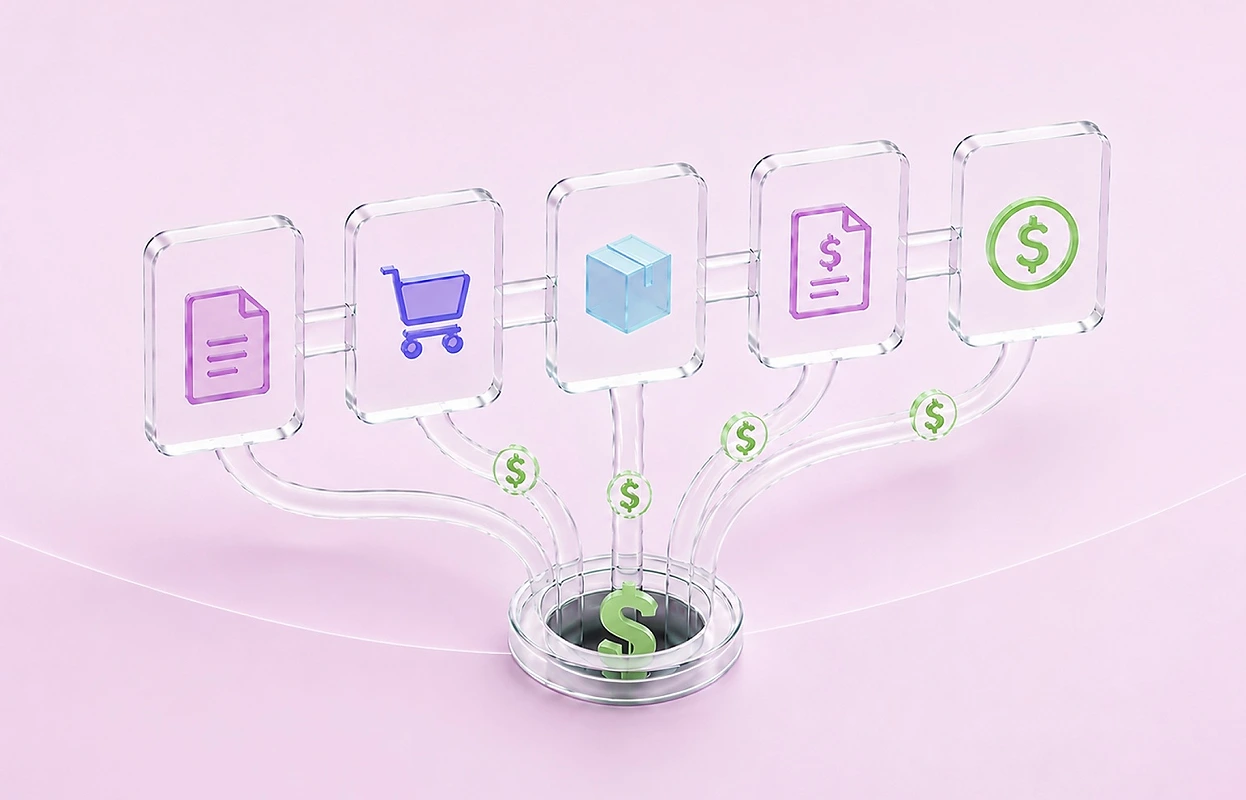
The real fix is connection. When sales, accounting, inventory, and operations all read from and write to the same place, the data only gets entered once and everyone downstream sees it instantly. A sale automatically updates the books and the stock count. The close stops being an archaeology project. "How many do we have?" has one answer, and it's right.
That's the category of software people mean when they say "ERP," and the word scares small companies off because it sounds like something only enterprises buy. It isn't anymore. Modern systems like Mindworks are built so a growing business can run finance, inventory, sales, and operations on one connected platform without needing an IT department to hold it together.
You don't need to switch the day QuickBooks gets a little tight. But if you recognized your own company in three or more of the signs above, the tools aren't saving you money anymore. They're costing you time, accuracy, and the occasional customer — you just haven't put a number on it yet.
A good next step: track how many hours your team spends this month moving data between systems. Most people are shocked by the total. That number is what you're actually paying for "free" spreadsheets.